Residential
Innsbruck, Austria · 2023
About the Project
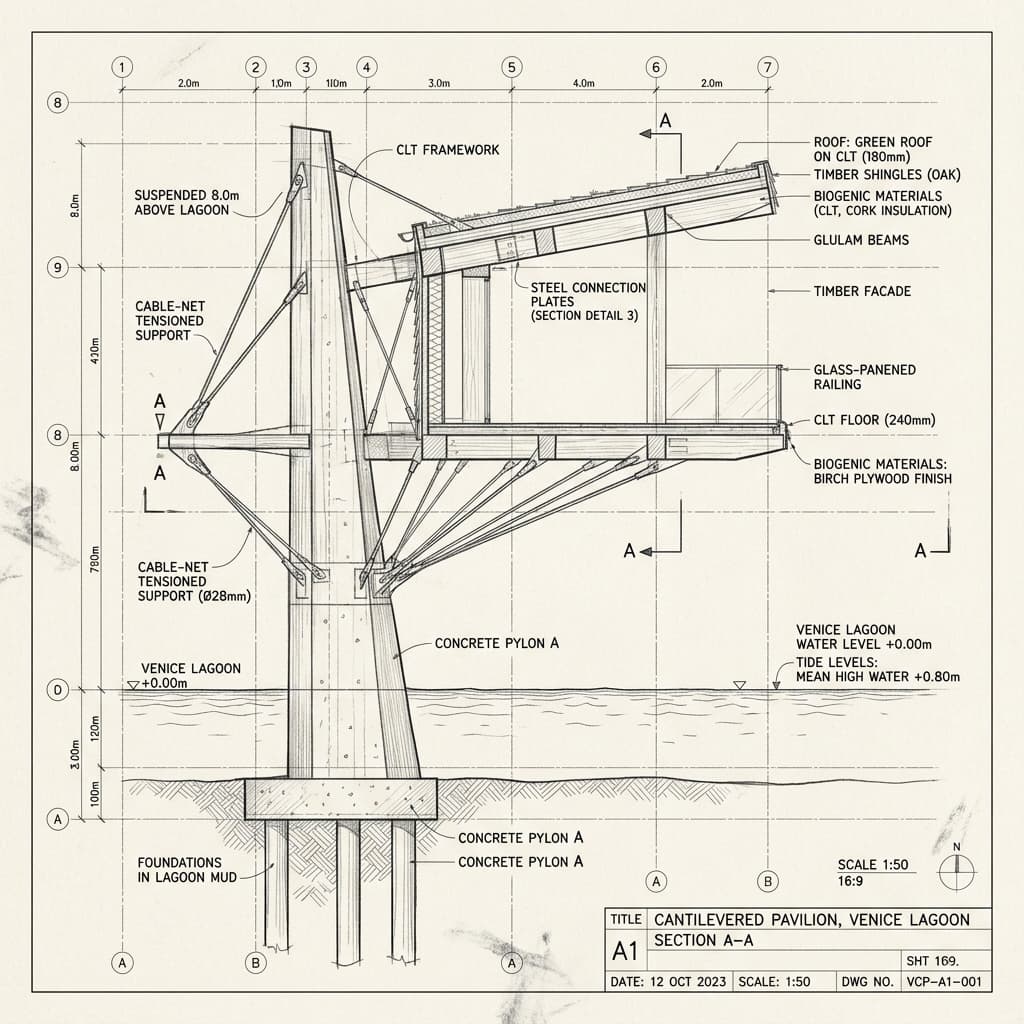
The Nadir Water Pavilion was commissioned as part of Venice's programme of civic spaces for the lagoon islands — an acknowledgement that the city's identity extends beyond the Grand Canal and into the quiet geography of the lesser-known islands. The site on Isola di San Giacomo offered no precedent: a concrete jetty, 14 metres wide, projecting 60 metres into the lagoon, subject to flooding twice daily.
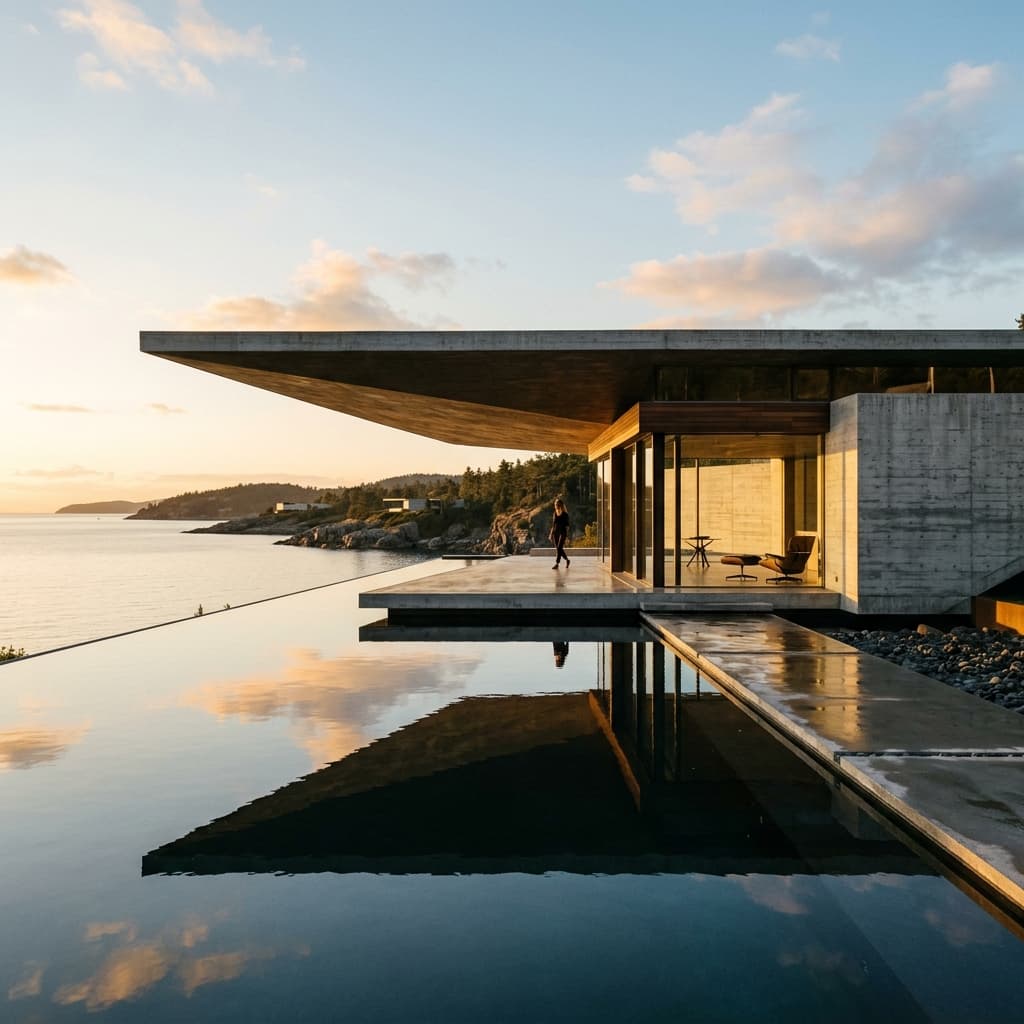
The structural challenge was unprecedented for the practice. A building that must be habitable at all tide levels, structurally independent of the jetty (which has a 30-year remaining life), and capable of being read as a single coherent object from the water, from the vaporetto approach, and from the air. The solution — a full-building cantilever suspended from a tensioned cable net anchored to two 18-metre concrete pylons — emerged from Marcus Chen's environmental analysis, which showed that raising the floor by 8 metres cleared the flood risk entirely while also maximising the acoustic isolation from the water.
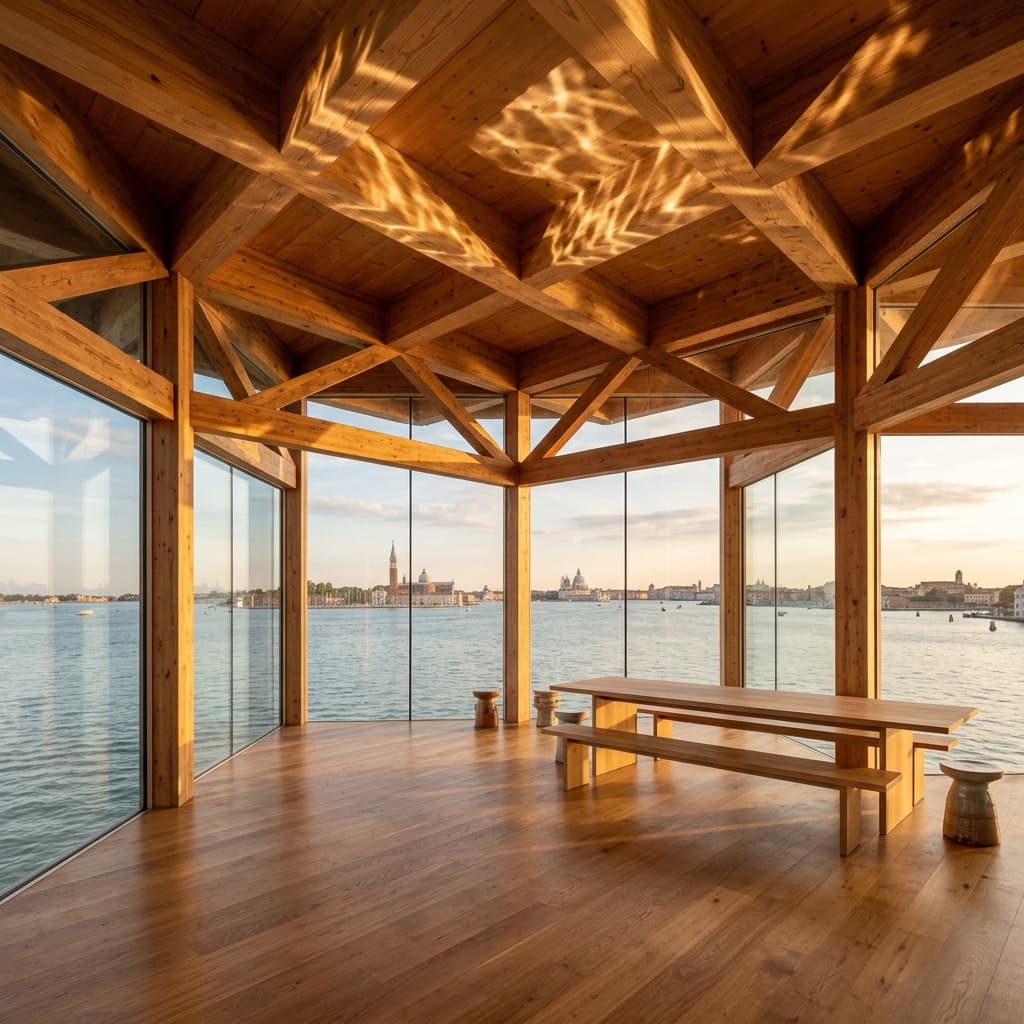
The pavilion is constructed exclusively from biogenic materials: cross-laminated timber from certified Norwegian forests, a bio-based composite cladding panel developed from flax and hemp fibres, and a structural adhesive derived from seaweed polymer. The building absorbs more carbon than was emitted in its construction — it is, across its lifetime, a carbon sink.
Below the cantilevered volume, the space between building and water becomes a room in itself — a vaulted void 8 metres high whose ceiling is the underside of the pavilion and whose floor is the lagoon. At low tide, visitors can descend to the jetty level and stand in this space, experiencing the architecture from its most intimate angle.
Development History
Jul 2016
Competition Win
Feb 2017
Environmental Analysis
2017–2018
Structural Innovation Period
Dec 2018
Planning & Heritage Approvals
Jan 2019
Construction
Jun 2020
Completion
Every landmark begins with a conversation. Share your vision with our studio.
Begin the Dialogue →